
Presidential Wiretapping: An Institutional Security Threat That Should Not Be Reduced to Political Drama
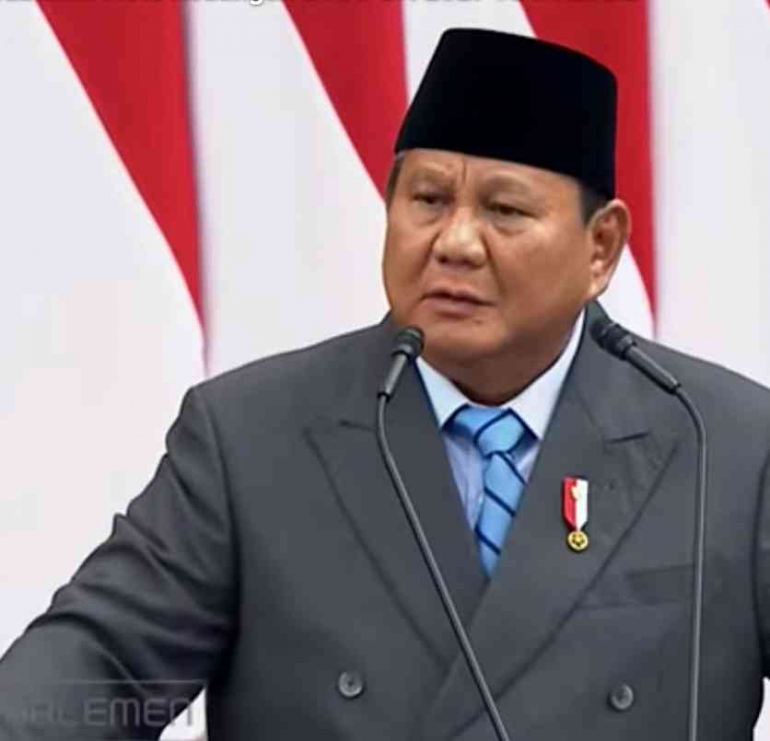
The arrest of three senior Indonesian police officers over alleged illegal wiretapping targeting President Prabowo Subianto and several other state figures should be a matter of serious public concern. This is not merely a case of personnel reshuffling or elite rivalry within the government. If the investigators’ allegations are proven, the case raises fundamental questions about the abuse of authority, the integrity of police institutions, and the security of state information.
In its report today, Reuters placed the arrests within a broader political context, including Prabowo’s relationship with former President Joko Widodo, declining public satisfaction, economic pressures, and the deployment of military personnel in Jakarta. These developments may help explain Indonesia’s political environment. However, combining all these issues without distinguishing between correlation and causation risks diverting attention from the central question: why was the police wiretapping system allegedly used outside established procedures to monitor the President and several other individuals?
There are three key issues that should be central to understanding this case.
First, the alleged wiretapping of the President is not a personal matter, but an issue of national institutional security.
The Head of the Indonesian National Police’s Criminal Investigation Agency, Asep Safrudin, explained that the three detained senior officers allegedly entered several telephone numbers into the Lawful Interception Management System (LIMS) without following the required verification procedures. Investigators also reported the alleged deletion of wiretapping records to conceal evidence. Eleven mobile phones, one iPad, and four flash drives have been seized as evidence. Police have also questioned ten witnesses and three expert witnesses.
If confirmed through digital forensic examination, these allegations would indicate that state instruments intended for legitimate law-enforcement purposes may have been misused by individuals with access to them. The issue extends beyond identifying who was targeted. Investigators must establish who accessed the system, who issued the instructions, who received the intercepted information, and for what purpose it was collected.
Wiretapping involving a head of state carries a different security dimension from an ordinary privacy violation. A president’s communications may contain information concerning national defence, foreign relations, economic policy, national security, and strategic decision-making. If such information is collected and used without proper authority, the consequences may extend beyond individual legal violations and create vulnerabilities within state institutions.
For this reason, the case should not be reduced to questions about an official’s political proximity to a former president or rivalry among political elites. Personal and political relationships may form part of the investigative context, but they cannot replace evidence. The investigation must establish whether the alleged actions constituted an abuse of authority by individuals, an operation involving a particular network, or part of a broader attempt to influence the state’s decision-making process.
Second, the possibility of a broader political operation must be investigated, but it should not be concluded before sufficient evidence is available.
From a political-security perspective, the alleged wiretapping of the President and several senior officials raises important questions about the strategic objectives behind the operation. Was the information collected for personal interests? Was there an attempt to accumulate influence through control of sensitive information? Were the intercepted communications used to pressure officials or influence political decisions? Or was there a network pursuing a broader objective that could affect government stability?
In the relationship between the government and its security apparatus, the state delegates specific powers to security institutions to perform designated functions. These institutions act as agents entrusted with access, resources, and information under the state’s mandate. When an agent is suspected of exercising those powers beyond its mandate, a principal-agent problem emerges: an instrument intended to serve the interests of the state may instead be used for purposes unknown to the principal.
If the wiretapping was carried out by an individual or a limited group for particular interests, the matter constitutes an abuse of authority that must be addressed through legal proceedings. However, if the investigation uncovers coordination, the distribution of information to political networks, the use of intercepted communications to control public officials, or plans to undermine the government’s constitutional authority, the case could develop into a broader national security issue.
This distinction is essential. Illegal wiretapping does not automatically constitute treason or an attempt to overthrow the government, and treason is not synonymous with a coup. Establishing preparations for a seizure of power requires evidence of political objectives, coordination among actors, operational capabilities, and concrete actions directed towards changing the government outside constitutional mechanisms.
Yusril Ihza Mahendra, the Coordinating Minister for Law, Human Rights, Immigration, and Corrections, has stated that investigators have not found indications of treason. This statement deserves attention because it indicates that the government itself has not reached such a conclusion. The public must therefore distinguish between a potential threat under investigation and a criminal offence that has already been established.
This position does not mean that the seriousness of the case is being underestimated. On the contrary, threats to the state must be addressed through rigorous evidentiary standards. If a network preparing unconstitutional actions is identified, the state must respond on the basis of evidence and law. If no such network is established, legal proceedings must still ensure that any proven abuse of the wiretapping system receives appropriate consequences