
INDONESIA’S POLITICAL TRANSITION: NOT A SPECULATIVE APPROACH
Political transitions inevitably bring changes in the configuration of power. A new administration does not simply inherit the authority of its predecessor; it also assumes responsibility for defining its own political priorities, establishing policy direction, and building the institutional arrangements required to implement its governing agenda. In a presidential system, this process may involve changes in cabinet composition, adjustments to political alliances, the redistribution of administrative responsibilities, and a reassessment of the government’s relationship with influential political actors. Such developments should not automatically be interpreted as signs of political instability. More often, they represent the normal consequences of a transition from one governing leadership to another.
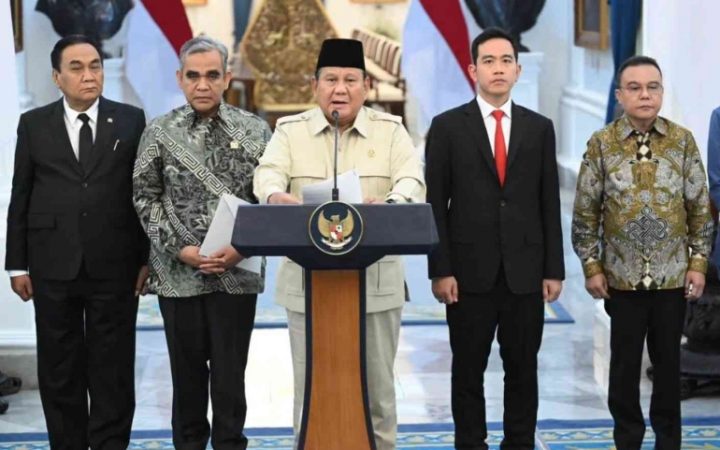
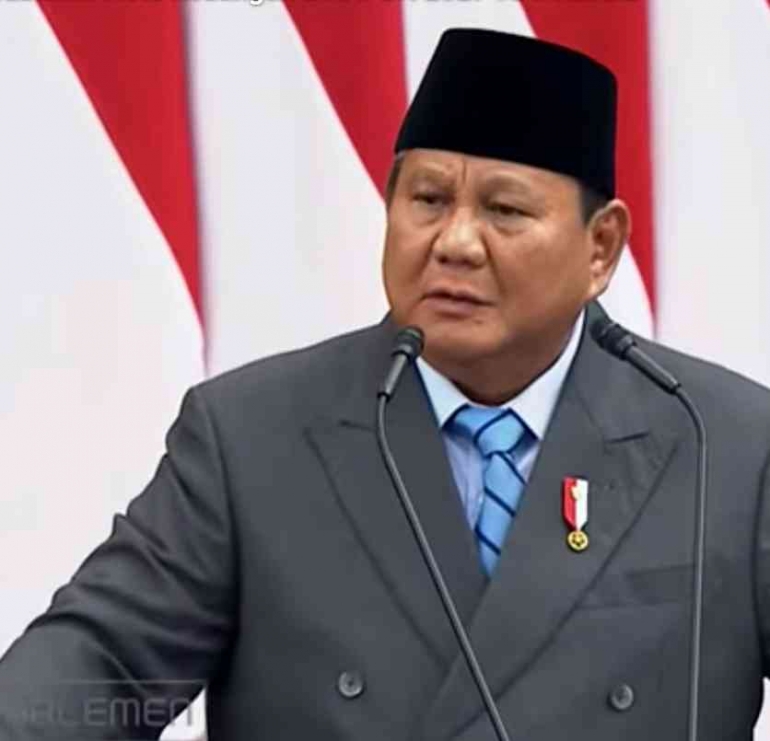
Indonesia is currently experiencing this process under President Prabowo Subianto. His administration is gradually defining its own policy priorities, including a stronger emphasis on national economic sovereignty, the management of strategic natural resources, industrial development, food and energy security, and a more substantial role for the state in directing economic transformation. These priorities inevitably require adjustments to existing political and institutional arrangements. The central question, therefore, is not whether the president is consolidating political authority, but whether that authority is being exercised within constitutional boundaries and translated into policies that generate sustainable national benefits.
Political consolidation, in this sense, is not inherently synonymous with authoritarianism or institutional deterioration. A president elected through a constitutional process must have sufficient political and administrative capacity to implement the program presented to voters. Without an effective governing coalition, coherent cabinet coordination, and a functioning bureaucracy, even a legitimate electoral mandate may become difficult to translate into public policy. The consolidation of governing authority can therefore be understood as part of the process through which an administration establishes political coherence and policy effectiveness.
Nevertheless, political strength must remain subject to institutional accountability. The distinction is essential. A government may legitimately seek greater coordination and control over its policy agenda, but it cannot use political authority to weaken constitutional oversight, undermine judicial independence, or disregard legal obligations. The quality of political consolidation must ultimately be measured by the strength of the institutions it builds, rather than by the extent of power accumulated by the executive.
The relationship between political leadership and policy continuity is rarely straightforward. A new president may inherit programs, institutions, and political alliances from the previous administration, but inheritance does not require permanent dependence. The president must retain the political space to determine which policies should continue, which should be adjusted, and which should be replaced.
This is particularly relevant in Indonesia, where political coalitions often extend beyond ideological alignment and are shaped by electoral calculations, parliamentary support, regional interests, and elite negotiations. An electoral coalition is not necessarily a permanent political command structure. Once a president assumes office, the incentives and responsibilities of governing differ from those of campaigning. Political actors who previously cooperated may gradually pursue different priorities, while new alliances may emerge around the administration’s evolving agenda.
From this perspective, changes in political relationships should be understood as part of the institutional and strategic adaptation of a new government. They do not automatically indicate a deliberate attempt to eliminate political opponents or dismantle the legacy of a predecessor. Such interpretations require evidence of specific actions, intentions, and institutional consequences.
Prabowo’s administration should therefore be assessed according to its own policy performance and institutional conduct. The relevant question is whether its political consolidation strengthens the government’s capacity to deliver public programmes, improve administrative coordination, and implement national development priorities. If it does, consolidation may contribute to governing effectiveness. If it produces excessive centralization, weakens oversight, or concentrates decision-making without adequate accountability, it may instead create institutional vulnerabilities.
The distinction between these two outcomes is far more important than speculation about personal rivalries among political elites.
The resignation of Vice President Gibran Rakabuming Raka has attracted considerable attention, partly because it represents an unusual development in Indonesia’s post-Reformasi presidential politics. However, its political significance should be assessed proportionately rather than exaggerated through assumptions about an impending power struggle or a breakdown of national stability.
A vice president occupies an important constitutional position, but the political consequences of a resignation depend on the circumstances surrounding it. The departure of an officeholder does not automatically destabilize the government, particularly when the president remains in office, the executive administration continues to function, and constitutional mechanisms remain available to address the resulting vacancy.
The Indonesian Constitution provides a framework for filling a vacant vice-presidential position. Under Article 8, paragraph (2), the People’s Consultative Assembly (MPR) must convene within sixty days to elect a vice president from two candidates nominated by the president. This mechanism demonstrates that a vacancy in the vice-presidential office does not, by itself, require a presidential election or create a constitutional vacuum. The continuity of government remains institutionally protected, provided the relevant constitutional procedures are properly followed.
The more important consideration is the political capacity of the individual concerned. A vice president’s departure could become a source of national instability if that individual possessed an independent political organization capable of mobilizing significant opposition, commanded substantial institutional or security influence, controlled a decisive parliamentary coalition, or had the capacity to trigger a serious constitutional confrontation. Under such circumstances, a resignation might become part of a broader political crisis.
However, such a conclusion cannot be presumed merely because the departing vice president is the son of a former president or because his political position is associated with a prominent political family. Family connections and political symbolism are not equivalent to independent political power. Nor does public visibility automatically translate into the organizational capacity required to destabilize a national administration.
The relevant question is whether the departing vice president possesses sufficient independent political resources to challenge the government’s institutional stability. Without evidence of such capacity, the resignation should be treated primarily as a change in the composition of the executive leadership, accompanied by the constitutional procedures necessary to fill the vacancy.
This does not mean that the circumstances surrounding the resignation are unimportant. The legal issues concerning educational documents, the applicable court decisions, and the constitutional status of the office must be addressed through the appropriate legal mechanisms. These matters deserve independent scrutiny. However, they should not automatically be transformed into a narrative of conflict between the president and his predecessor.
The resignation should therefore be assessed through two separate dimensions: its legal and constitutional implications, and its actual consequences for political stability. Conflating the two risks magnifying a political development beyond what the institutional circumstances justify.
Indonesia’s economic outlook deserves serious attention. The rupiah has experienced significant depreciation, the stock market has faced substantial pressure, and foreign investors have expressed concerns about regulatory predictability and the transparency of the domestic capital market. These developments cannot be dismissed as ordinary market fluctuations or attributed exclusively to international conditions.
However, identifying economic risks is not the same as establishing their causes. A sound assessment must distinguish between structural weaknesses in the economy, external financial pressures, domestic regulatory problems, and political developments. Treating all these factors as consequences of presidential consolidation produces an overly narrow explanation of a multidimensional economic situation.
One of the most important challenges concerns the quality of Indonesia’s capital market. MSCI has raised concerns about opaque shareholding structures, insufficiently reliable free-float information, suspected coordinated trading, and the effectiveness of regulatory enforcement. These are substantive governance issues that require technical and institutional reforms. They cannot be adequately addressed through political explanations alone.
The government’s response should focus on improving market transparency, strengthening investor protection, enforcing regulations consistently, and ensuring that the Indonesia Stock Exchange meets internationally recognized standards of market integrity. The credibility of the capital market depends less on political narratives than on the reliability of its institutions and the quality of its regulatory environment.
At the same time, the depreciation of the rupiah and the movement of foreign capital must be understood within a broader international context. Global monetary conditions, the strength of the US dollar, geopolitical tensions, energy prices, and changing investment preferences all influence capital flows into emerging markets. Domestic policy credibility remains important, but external pressures should not be ignored when interpreting financial developments.
The government’s own financial stability assessment, released through the Financial System Stability Committee in November 2026, acknowledged increased pressure from global geopolitical tensions, higher energy prices, tighter international monetary conditions, domestic liquidity constraints, and the MSCI announcement. It nevertheless assessed that Indonesia’s fiscal, monetary, and financial stability had remained manageable during the third quarter of 2026, supported by policy coordination among the relevant authorities. This assessment offers a more differentiated picture than the assumption that political developments alone explain the country’s economic uncertainty.
Indonesia’s economic challenges are real, but they should be addressed through precise diagnosis rather than political generalization.
Another important issue concerns the government’s intention to ensure that a greater proportion of the benefits generated by mining activities accrues to the state and, ultimately, to the Indonesian public.
President Prabowo’s instruction that at least 70 per cent of the benefits from mining permits should go to the state reflects a broader commitment to strengthening national control over strategic natural resources. The policy is consistent with a longstanding constitutional principle in Indonesia: natural resources must be managed for the greatest possible benefit of the people.
This objective is not inherently incompatible with investment or market-based economic activity. Countries with substantial natural-resource endowments routinely seek to improve public revenue, strengthen domestic industrial capacity, and ensure that resource extraction generates greater economic value within their national economies. The debate should therefore not be reduced to a simplistic opposition between state intervention and private investment.
The more relevant question is how the government intends to implement the policy. The distinction between the state’s share of economic benefits and its ownership of corporate equity must remain clear. A target concerning the distribution of benefits from mining permits does not automatically mean that the state will acquire 70 per cent ownership of every mining company.
The government must explain how the proposed share will be calculated, whether it applies to existing or future permits, how it interacts with current contractual arrangements, and what legal instruments will govern its implementation. Investors require regulatory clarity, while the public has a legitimate interest in receiving a fair return from the exploitation of national resources.
A well-designed resource policy can strengthen state revenue, encourage domestic value creation, and improve national economic resilience. Poorly designed implementation, however, may discourage investment, create contractual disputes, and weaken the predictability of the business environment.
The objective should therefore be to establish a credible balance between national interests and investment certainty. Indonesia does not need to choose between protecting its natural resources and welcoming investors. It needs institutions capable of ensuring that investment contributes meaningfully to national development.
One recurring problem in the analysis of political transitions is the tendency to equate stronger executive coordination with democratic deterioration. Although excessive concentration of power can certainly weaken democratic institutions, the two developments should not be treated as identical.
A presidential administration requires the capacity to coordinate ministries, establish priorities, mobilize public resources, and ensure that policies are implemented consistently. In a large and geographically complex country such as Indonesia, fragmented authority and competing bureaucratic interests can seriously undermine policy effectiveness. Political coordination is therefore a legitimate requirement of governing.
The democratic question concerns the limits within which that coordination takes place. Parliament must retain its oversight responsibilities. Courts must remain independent. Law enforcement institutions must operate according to legal standards. Public criticism and civil society participation must remain protected. These institutions are not obstacles to effective government; they are safeguards against the misuse of executive authority.
The challenge facing Prabowo is consequently not simply to consolidate political support, but to demonstrate that a strong government can coexist with institutional restraint. An administration that can coordinate its policies while respecting constitutional checks and balances may provide the political stability necessary for long-term development. Conversely, an administration that relies excessively on personal authority and weakens institutional oversight may undermine the very stability it seeks to establish.
Political maturity requires recognizing both possibilities without prematurely assuming either outcome.
Indonesia’s current challenges should also be viewed in relation to its longer-term development opportunities. The country possesses substantial natural resources, a large domestic market, a strategic geographical position, and considerable potential in energy transition, downstream industrial development, digital infrastructure, and regional economic integration.
These advantages do not guarantee success. They require effective institutions, competent public administration, investment in human capital, technological development, and a predictable regulatory environment. Nevertheless, they provide a substantial foundation upon which a coherent national development strategy can be built.
A new administration has the political opportunity to reassess development priorities and address structural weaknesses inherited from previous governments. Continuity should be preserved where policies have demonstrated effectiveness, while reforms should be pursued where existing arrangements have failed to deliver adequate public benefits.
This process should not be understood as a rejection of the previous administration. National development is cumulative. Every government inherits both achievements and unresolved problems from its predecessors. A responsible administration should preserve what works, improve what remains inadequate, and correct policies that no longer serve the national interest.
Prabowo’s political mandate provides the opportunity to pursue such adjustments. Its success, however, will depend on whether the administration can translate political authority into measurable economic and institutional improvements.
Indonesia’s political transition should not be interpreted primarily through the lens of personal rivalries among political elites. Changes in political alliances, cabinet arrangements, and executive leadership are normal features of a presidential system, particularly when a new administration seeks to implement a distinct governing vision.
The resignation of a vice president is undoubtedly an important constitutional development, but it does not automatically constitute a national political crisis. Its consequences must be assessed according to the actual distribution of political power, the institutional capacity of the departing officeholder, and the continuity of constitutional government. Political symbolism alone cannot establish the existence of a destabilizing force.
Similarly, economic uncertainty should not be explained exclusively through assumptions about presidential consolidation. Indonesia faces genuine challenges involving capital-market governance, regulatory credibility, currency pressures, and the management of strategic natural resources. These issues require serious scrutiny, but they also require analytical precision. External economic pressures, domestic structural weaknesses, and policy uncertainty must be examined as distinct but interconnected factors.
There is no reason to assume that a stronger presidential administration must necessarily produce economic instability. Nor is there any basis for assuming that political consolidation will automatically generate development. The decisive factor is the quality of governance: whether executive authority is exercised predictably, whether institutions remain accountable, whether investors receive legal certainty, and whether national resources are managed for the benefit of the public.
Indonesia should move beyond the assumption that political stability depends on preserving the influence of particular individuals or maintaining the political arrangements of a previous administration. Stability must rest on functioning institutions, constitutional continuity, and public confidence in the government’s ability to deliver results.
The country does not need political nostalgia, nor does it benefit from speculative narratives that turn every change in elite relations into evidence of an impending crisis. It needs a mature political assessment that recognizes the legitimacy of policy change while demanding accountability for its implementation.
Ultimately, the measure of Prabowo’s leadership will not be how successfully he consolidates political influence, but whether he can transform that authority into institutional credibility, economic resilience, and tangible improvements in public welfare. That is the standard by which the administration should be judged, and it is also the basis for a more constructive and realistic assessment of Indonesia’s political and economic future.