

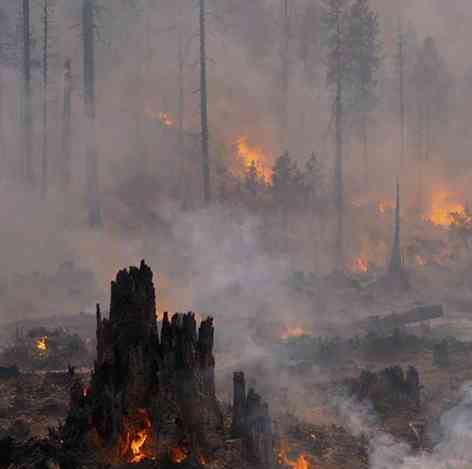
Indonesia’s response to the recurring haze crisis in Southeast Asia raises a fundamental question about the relationship between national sovereignty and regional responsibility. A report published by the South China Morning Post (SCMP) on 20 October 2026, concerning the Indonesian government’s retreat from its position on accepting foreign assistance to combat forest and land fires, highlights a dilemma that extends beyond emergency firefighting. At stake are not only the government’s capacity to manage an environmental crisis, but also its approach to regional cooperation, public accountability, and the protection of citizens from the consequences of transboundary air pollution.
Indonesia has legitimate reasons to exercise control over emergency operations within its territory. Sovereignty gives the state the authority to determine its national priorities, coordinate its institutions, and decide how external assistance should be incorporated into domestic policy. However, sovereignty should not be interpreted as a reason to restrict cooperation when a crisis exceeds the practical capacity of national institutions or imposes substantial costs on neighbouring countries. The more consequential question is not whether Indonesia should preserve its sovereign authority, but how that authority can be exercised effectively, transparently, and responsibly.
Sovereignty Is Not the Opposite of International Cooperation
The debate over foreign assistance in combating forest and land fires should not be reduced to a binary choice between national independence and foreign intervention. In an emergency, international cooperation can strengthen domestic capacity without diminishing the authority of the state. Technical expertise, aerial firefighting capabilities, specialised equipment, satellite-based monitoring, and additional logistical support can complement national operations when they are coordinated under an agreed framework.
Indonesia has substantial experience in managing large-scale fire emergencies. Nevertheless, the scale and complexity of recurring fires demonstrate that national resources do not always eliminate the need for external support. Reports on the 2026 crisis describe the mobilisation of more than 60,000 personnel and approximately 50 aircraft. These deployments indicate a considerable operational response. Yet the scale of mobilisation should not be confused with proof that the underlying crisis has been resolved.
The distinction is important. A government may deploy extensive resources and still face limitations in reaching remote areas, containing fires across difficult terrain, or responding to rapidly changing weather conditions. International assistance can help address such constraints, provided that its deployment is based on clearly defined needs, operational coordination, and respect for Indonesian law.
The issue, therefore, is not whether Indonesia should accept foreign assistance unconditionally. Rather, the government should establish transparent criteria for determining when assistance is necessary, which capabilities are required, and how external resources can be integrated into national command structures. Such an approach would reinforce state capacity rather than undermine it.
Sovereignty is meaningful when the state can protect its population, manage its territory, and fulfil its responsibilities. If the invocation of sovereignty becomes an obstacle to obtaining effective assistance during a crisis, the concept risks being reduced to a symbolic assertion of authority rather than a practical instrument of public protection.
Transboundary Haze Is a Regional Responsibility
Forest and land fires in Indonesia are not exclusively domestic concerns when their consequences extend across national borders. Smoke and fine particulate matter can travel over considerable distances, affecting public health, economic activity, transportation, and environmental quality in neighbouring countries. The resulting costs can include respiratory illness, disrupted aviation, reduced visibility, school closures, and losses to tourism and other economic sectors.
Nevertheless, the existence of transboundary effects does not automatically establish that every fire was deliberately started, that all affected areas share the same causes, or that responsibility can be assigned without further investigation. A credible assessment must distinguish between natural conditions, land-management practices, corporate activities, individual actions, and failures in prevention or enforcement. Accountability should be based on evidence rather than assumptions.
This distinction matters because the causes of forest and land fires are often interconnected. Prolonged dry conditions can intensify fire risk, while land clearing, inadequate land management, weak enforcement, and delayed responses can contribute to the scale and persistence of fires. Natural conditions may exacerbate a crisis, but they do not eliminate the need to investigate human conduct or assess the effectiveness of government policy.
Indonesia’s responsibilities are also connected to its regional commitments. The ASEAN Agreement on Transboundary Haze Pollution (AATHP), which Indonesia ratified through Law No. 26 of 2014, provides an institutional framework for regional cooperation in preventing and mitigating transboundary haze. The agreement reflects the recognition that environmental emergencies of this nature require coordination among states rather than isolated national responses.
Regional cooperation does not mean that Indonesia must relinquish its authority over domestic affairs. It means recognising that the consequences of environmental crises can cross borders and that effective prevention often requires shared information, coordinated responses, technical collaboration, and mutual accountability.
Indonesia should therefore approach regional cooperation as an opportunity to demonstrate leadership within ASEAN. Its credibility will depend not simply on its defence of sovereignty, but on its ability to translate that principle into measurable improvements in environmental governance and regional trust.
Emergency Response Must Be Followed by Structural Reform
The immediate priority during a fire emergency is to protect human life, contain active fires, and minimise further environmental damage. Yet recurring haze episodes also raise a more fundamental question: why do large-scale fires continue to emerge despite repeated emergency deployments and years of regional cooperation?
A response centred exclusively on firefighting risks addressing the symptoms while leaving the underlying causes largely intact. Fire suppression remains essential, but it must be accompanied by effective prevention, consistent law enforcement, improved land management, and accountability for those responsible for illegal burning or other violations.
The historical costs of Indonesia’s fire crises illustrate the importance of this broader perspective. The World Bank estimated that the 2015 forest and land fires burned approximately 2.6 million hectares and caused economic losses of around US$16.1 billion. Although these figures concern an earlier crisis and should not be treated as estimates of the 2026 situation, they demonstrate the potentially enormous economic consequences of allowing fires to escalate.
The relevant lesson is that prevention is not merely an environmental obligation. It is also a matter of economic efficiency, public health, fiscal responsibility, and national resilience. Repeatedly mobilising personnel and equipment after fires have spread can impose substantial costs, while the resulting pollution places additional burdens on health services, businesses, and households.
Structural reform should begin with better fire-risk mapping, reliable early-warning systems, more effective monitoring of vulnerable landscapes, and stronger coordination between central and local governments. Enforcement must also be consistent, including investigations into suspected illegal burning and appropriate sanctions where violations are established. Where land-management practices contribute to recurring fires, policy interventions should address the incentives and institutional weaknesses that allow those practices to continue.
Equally important is the role of communities living in and around fire-prone areas. Prevention strategies are unlikely to succeed if they rely entirely on top-down enforcement without providing viable alternatives for land management and livelihoods. Local participation, accessible reporting mechanisms, public education, and incentives for sustainable practices can strengthen prevention and improve the legitimacy of government interventions.
The government should also establish clear performance indicators that extend beyond the number of personnel deployed or fires extinguished. Relevant measures include the area affected by fires, the duration and severity of haze episodes, the number of communities exposed to hazardous air quality, the effectiveness of early intervention, and the enforcement outcomes of investigations. Such indicators would allow the public to assess whether emergency spending is producing lasting improvements.
The objective should not be to eliminate emergency operations, which will remain necessary, but to reduce the frequency, scale, and consequences of crises through sustained institutional reform.
Climate Conditions Matter, but They Do Not Eliminate Accountability
Weather and climate conditions are important factors in assessing the severity of forest and land fires. Prolonged drought and elevated temperatures can dry vegetation and peatlands, increasing the likelihood that fires will spread and become difficult to control. These conditions can complicate suppression efforts even when governments deploy substantial resources.
However, explaining a crisis is not the same as excusing failures to prevent or manage it. Natural conditions may intensify fire risk, but the scale of the resulting damage also depends on land-use decisions, preparedness, early detection, enforcement, and the speed of the response.
A balanced assessment must therefore avoid two extremes. The first is to attribute every fire exclusively to human misconduct without adequately examining environmental conditions and the evidence surrounding individual incidents. The second is to attribute the crisis primarily to weather and thereby overlook the policy and governance factors that can either aggravate or mitigate its effects.
The same standard should apply when evaluating the government’s performance. Large-scale mobilisation is evidence of operational activity, but not necessarily of operational effectiveness. Conversely, the persistence of fires during severe dry conditions does not, by itself, prove that every government intervention has failed. The appropriate assessment requires evidence of both the scale of the challenge and the results of the response.
Public reporting should consequently provide consistent information on fire locations, affected areas, air quality, health impacts, response times, and the outcomes of enforcement actions. Where estimates differ among government agencies, independent researchers, or civil society organisations, those differences should be explained rather than concealed. Transparent reporting is essential to distinguishing genuine progress from claims that have yet to be substantiated.
Indonesia’s Regional Leadership Depends on Credibility
Indonesia occupies a central position in Southeast Asian diplomacy and has long emphasised the importance of regional cooperation through ASEAN. Its handling of the haze crisis therefore has implications beyond immediate environmental management. It affects the credibility of regional commitments and the confidence neighbouring countries place in Indonesia’s willingness to address problems with cross-border consequences.
Accepting foreign assistance does not necessarily signal weakness. Under appropriate arrangements, it can demonstrate confidence in national institutions and a pragmatic understanding of the limits of domestic capacity. Governments routinely cooperate in disaster management, public health, and environmental protection because the scale of certain emergencies makes unilateral action less effective.
At the same time, external assistance must be governed by clear safeguards. Indonesia can preserve operational control, determine the terms of engagement, protect sensitive information, and ensure that assistance aligns with national priorities. These arrangements should be communicated clearly so that the public understands both the purpose of cooperation and the boundaries of external involvement.
The government should also distinguish between diplomatic sensitivity and operational necessity. Protecting national dignity is a legitimate concern, but it should not prevent authorities from assessing assistance on its merits. When lives, livelihoods, and regional environmental conditions are at stake, decisions should be guided by effectiveness, accountability, and public interest.
Indonesia’s leadership within ASEAN will be strengthened when its policies demonstrate that national sovereignty and regional responsibility can reinforce one another. A state that manages its domestic challenges transparently, cooperates constructively with its neighbours, and acts decisively to reduce cross-border harm is better positioned to exercise diplomatic influence than one that treats cooperation primarily as a question of national prestige.
From Symbolic Sovereignty to Effective Governance
The debate surrounding foreign assistance in Indonesia’s haze crisis should ultimately be understood as a test of governance. The government must balance the legitimate exercise of sovereign authority with the practical demands of emergency management, environmental protection, and regional responsibility.
The evidence of extensive firefighting mobilisation demonstrates that Indonesia has committed significant resources to responding to the crisis. Yet the persistence of haze-related health risks, disruptions to economic activity, and recurring environmental emergencies underscores the need to evaluate outcomes as carefully as inputs. The scale of a response matters, but its effectiveness matters more.
Three priorities follow from this assessment. First, Indonesia should adopt transparent, needs-based criteria for accepting international assistance while retaining national command and accountability. Second, it should strengthen prevention and enforcement so that emergency operations become less frequent and less costly over time. Third, it should use ASEAN mechanisms to improve information-sharing, technical cooperation, and coordinated action against transboundary haze.
These priorities are mutually reinforcing. Stronger domestic institutions make international cooperation more effective, while regional collaboration can provide capabilities and information that improve national preparedness. Both can strengthen sovereignty by enhancing the state’s ability to protect its citizens and fulfil its obligations.
Ultimately, sovereignty should be judged not only by the authority a state asserts, but also by the responsibilities it fulfils. Indonesia has every reason to safeguard its independence and retain control over its domestic affairs. But sovereignty acquires its fullest meaning when it enables the state to protect public health, manage environmental risks, and contribute to regional stability.
The haze crisis is therefore not simply a question of whether Indonesia should accept foreign assistance. It is a question of whether the government can transform a recurring emergency into an opportunity for institutional improvement. If sovereignty is to remain a credible foundation of Indonesian policy, it must be demonstrated through effective action, transparent accountability, and a willingness to cooperate when cooperation serves the public interest.
The ultimate measure of national strength is not the ability to confront a crisis alone. It is the ability to mobilise the most effective resources available, protect the population, and prevent the same crisis from recurring on the same scale. In Southeast Asia, where environmental risks do not respect national borders, sovereignty and responsibility must go hand in hand.